II. The Cross as Touchstone: from inspiration to a working document

Standaard

From inspiration to a working document for the spiritual discernment of the synodal path of the Church


Introduction

In our time, the Church is on the move. Throughout the world she is invited to adopt a synodal attitude: listening to the Holy Spirit, discerning in communion, and bearing shared responsibility for her mission in the world of today. This journey calls for more than organizational adjustments or methodological innovations. It touches the very heart of what it means to be Church and raises the fundamental question of the source from which we live and the goal toward which we are journeying.

This text is intended to serve as inspiration for a possible working document on the synodal path of the Church. It does not seek to offer a fully developed program or a fixed framework, but rather to encourage reflection, prayer, and spiritual discernment. Synodality is therefore not understood merely as a process or a structure, but as a spiritual path of conversion, receptivity, and self-giving.

At the center stands the Cross of Christ: not as an obstacle to renewal, but as the decisive spiritual criterion that gives direction to discernment and to the fruitfulness of ecclesial life. Under the sign of the Cross it becomes clear that true renewal does not arise from human self-construction, but from a life that entrusts itself to God.

In a context of secularization, ecclesial restructuring, and accelerating social change, this text seeks to recall that the vitality of the Church does not spring from activity or organization, but from her living communion with Christ. Where synodality becomes detached from prayer, adoration, and Eucharistic grounding, it risks losing its inner orientation. Where, by contrast, it is lived under the sign of the Cross, it can grow into a path of truth, hope, and love, ordered toward the Resurrection.

The proposed reflections, questions, and practical points are intended as aids to deepen synodal processes and to anchor them in silence, prayer, and shared openness to the working of the Holy Spirit. They seek to open space for listening, discerning, and growing, in trust that the Church on her journey is sustained by the One who gave his life and lives.


Editorial Framework

The synodal path of the Church raises questions worldwide that go beyond method, structure, or organization. While listening, participation, and shared discernment are central, there is a growing awareness that synodality can bear fruit only if it remains rooted in a deeper spiritual criterion.

This possible (global) working document seeks to make a fundamental contribution to that reflection by considering the Cross of Christ as the decisive touchstone for synodal processes. Against the background of secularization, ecclesial restructuring, and accelerating social change, the author explores how synodality can preserve its evangelical identity.

The Cross is not understood as an obstacle to renewal, but as a hermeneutical center that gives direction to discernment, ecclesial fruitfulness, and priestly and parish life. The study brings systematic-theological reflection into dialogue with liturgical and pastoral dimensions and invites a renewed appropriation of synodality as a spiritual path of conversion, receptivity, and self-giving.


Abstract (Summary)

This study explores the Cross as a fundamental spiritual criterion for the synodal path of the Church. Against the background of global synodal processes, which strongly emphasize listening, discernment, and shared responsibility, the article asks what inner compass truly renders these processes evangelical. Its central thesis is that synodality cannot be reduced to method or structure, but essentially requires a conversion of heart.

In dialogue with Scripture, the liturgical tradition, and ecclesial experience, it argues that the Cross is not an obstacle to ecclesial renewal, but its decisive touchstone. Only where synodal discernment is carried out under the sign of Christ’s Cross can the Church grow into a credible community of hope, truth, and love, oriented toward the Resurrection.

Keywords:
Synodality – Cross – Church – discernment – suffering – Eucharist – ecclesiology – conversion


1. Synodality and the Question of the Criterion

At the beginning of the twenty-first century, the Church finds herself in an intense process of synodal reorientation. Throughout the world, forms of being Church are being sought in which listening, shared discernment, and shared responsibility take center stage. This process is carried by the desire to be Church with people, among people, and in service of the world of today.

At the same time, this synodal path raises fundamental questions. What is the inner criterion that gives direction to this shared journey? By what measure can we test whether synodal processes truly remain evangelical, rather than devolving into purely organizational or sociological trajectories?

In a context of accelerating social change, diminishing self-evidence of faith, and growing sensitivity to vulnerability and suffering, it is insufficient to approach synodality merely as a method or structure. It touches the very core of being Church and presupposes a profound spiritual attitude. Synodality calls for conversion of heart. It is precisely here that the Cross presents itself as the decisive spiritual touchstone.¹


2. The Cross as the Hermeneutical Center of the Christian Faith

The Cross is not a marginal phenomenon of the Christian faith, nor a burden from the past that can be set aside. It is the sign in which the path of Christ himself becomes visible: a path of self-giving, fidelity, and love that does not evade the suffering of the world. In this sense, the Cross functions as the hermeneutical center of the Christian faith.

The liturgical confession, “We adore you, O Christ, and we praise you, because by your holy Cross you have redeemed the world,” succinctly expresses that redemption does not take place apart from suffering, but precisely in the radical self-gift of Christ.² The Cross thus reveals a paradoxical logic: life springs forth where love gives itself away.

For the Church this means that her identity is not primarily determined by visible strength, social influence, or success, but by fidelity in vulnerability. Where the Church loses this cruciform identity, she risks losing her evangelical sharpness and making herself the measure of all things.


3. Synodality, Secularization, and the Question of the Source

In the contemporary ecclesial context, a subtle yet real danger emerges: that speaking about the Church—her plans, processes, and future scenarios—pushes living from God himself into the background. Not necessarily through conscious rejection, but because God increasingly becomes the object of analysis and organization, while being less explicitly adored and lived.

Where faith is primarily understood as vision, morality, or engagement, its inner dimension is impoverished. Activity, consultation, and policy-making then easily take the place of prayer, silence, and adoration. In this way the core of Christian existence shifts: no longer living from God, but acting about God and around God.

Synodal processes are valuable in themselves, but their fruitfulness is ultimately determined by the source from which they live. When synodality moves mainly at the level of communication, consensus-building, and structure, it risks becoming detached from its origin. The conversation may be intense and well-intentioned, yet inwardly unmoored: rich in words and poor in adoration.


4. Church History and Discipleship: Fruitfulness through the Cross

A glance at Church history confirms this paradox. The enduring unity of the Church amid division, her universal reach, and her continual fruitfulness in holiness and mercy point to a life-force that transcends any merely human origin.

Closer examination shows that this vitality has not arisen from power or triumph, but from a continual participation in the way of the Cross. Persecution, marginalization, and internal crises have not destroyed the Church, but have again and again purified and renewed her. In this sense, Church history can be understood as a paschal, not triumphalistic, procession of the Cross.

To be Christian means to follow Christ. This discipleship includes sharing in his path of self-giving. “Whoever does not take up his cross and follow me is not worthy of me” (Mt 10:38).³ Christian faith does not glorify suffering, but acknowledges that where suffering is unavoidable, it can, under the sign of the Cross, become a place of truth and possible fruitfulness. The image of the grain of wheat that dies in order to bear fruit (Jn 12:24) expresses this dynamic in an exemplary way.


5. Priestly and Parish Life as a Testing Ground for Synodality

This dynamic becomes particularly evident in priestly and parish life. The crisis of the priesthood is often described in organizational or sociological terms, but its deepest challenge is spiritual: the question of whether the priest lives from God, or gradually functions primarily for the Church.

In a context of restructuring, the risk is real that words, plans, and consultations take the place of silence, prayer, and inner receptivity. The crisis then is not primarily that too little is being done, but that too little is being received.

The same tension becomes visible in parish life. A parish can be well organized and yet remain inwardly poor. The first task, therefore, is not to save structures, but to open a space in which God can dwell anew.


6. Eucharist and Ecclesial Fruitfulness

At the center of all this stands the liturgy, and in particular the Eucharist. The Eucharist is not a religious service, but the sacramental presence of Christ’s self-gift. In it, the Cross is not merely remembered, but made present as the source and measure of ecclesial life.⁴

From this Eucharistic perspective it becomes clear that the Cross is not a sign of failure, but of direction. Where Christ is received in silence and reverence, synodality gains depth: listening becomes receptivity, and discernment becomes shared openness to a truth that no one possesses, but which is given.


7. Conclusion: Synodality under the Sign of the Cross

This study has argued that the Cross functions as the decisive spiritual touchstone for the synodal path of the Church. Synodality can be truly evangelical only when it is carried out in a cruciform attitude of conversion, receptivity, and self-giving.

The future of the Church does not lie beyond the Cross, but in its depth. Only there can she grow into a credible community of hope, because she knows that the final word does not belong to suffering or rupture, but to the Resurrection. Thus the Church remains on her journey as a pilgrim people, sustained not by her own strength, but by the One who gave his life and lives.


Footnotes

  1. Cf. Second Vatican Council, Lumen Gentium, no. 8.
  2. Roman Missal, Veneration of the Cross on Good Friday.
  3. Biblical quotations according to the Willibrord Translation.
  4. Cf. Second Vatican Council, Sacrosanctum Concilium, no. 47.

Reflection Questions and Practical Points

I. For Priests

Short reflection questions

  • Where do I live and act primarily for the Church, and where truly from God?
  • How does the Cross shape my way of leadership: correcting, liberating, or primarily burdensome?
  • Is my speech more oriented toward explaining and solving, or toward opening space in which God can speak?
  • Where does my priestly life call for slowing down and renewed grounding?
  • How visible is the Eucharist as the source of my daily action?

Practical points

  • Set aside daily, explicit time for silent adoration, apart from pastoral efficiency.
  • Let important pastoral decisions be preceded by prayer and inner discernment.
  • Practice spiritual leadership that does not seek to control everything, but allows space for growth and maturation.
  • Consciously unite personal vulnerability with the Cross, rather than compensating for it with activity.
  • Safeguard the Eucharist as the center of the priesthood, not as a functional item on the agenda.

II. For Parishes

Short reflection questions

  • Where in our parish is there space for adoration, silence, and receptivity?
  • Is our parish dynamic oriented more toward organization or toward spiritual deepening?
  • How do we experience the Eucharist: as a source of communion or as a self-evident ritual?
  • Where do we speak much about God, but live little with God?
  • What in our parish calls for letting go rather than preserving?

Practical points

  • Anchor parish meetings in prayer and the reading of Scripture.
  • Create regular moments of adoration or silent prayer in parish life.
  • Allow liturgical celebrations space for silence and reverence; avoid haste and over-programming.
  • Evaluate new initiatives not only for feasibility, but also for spiritual depth.
  • Foster a culture in which deepening of faith is more important than visible activity.

III. For Synodal Teams

Short reflection questions

  • Who truly speaks in our synodal conversation: ourselves, or also the Spirit?
  • Where do we confuse consensus with discernment?
  • Is our process sufficiently rooted in prayer and conversion?
  • Where does the Cross call for emptying and letting go in our deliberations?
  • What are we receiving, rather than organizing?

Practical points

  • Begin and end synodal meetings with silence and common prayer.
  • Provide explicit moments of reflective silence during deliberations.
  • Formulate a spiritual test question rooted in the Cross for important decisions.
  • Resist pressure for quick results; allow space for maturation and reconsideration.
  • Regularly connect synodal processes with Eucharistic celebration or adoration.

Concluding Prayer – Under the Sign of the Cross

Lord Jesus Christ,
you did not redeem your Church through power or success,
but through the way of the Cross.
Teach us to listen to your voice,
not only in words and processes,
but in silence, conversion, and receptivity.
Make us a Church that does not seek itself,
but lives from your love
and remains on the journey in trust in you. Amen.


Fr. Jack Geudens

Smakt, 19 January 2026
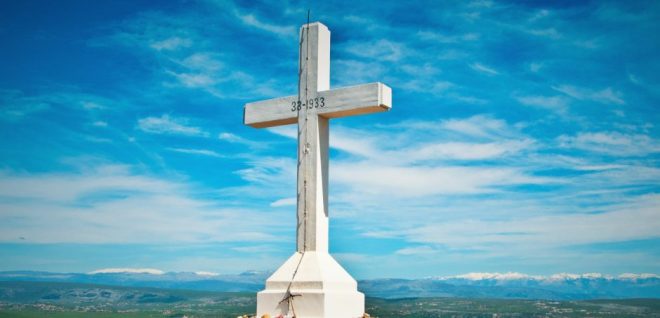
II. Het Kruis als Toetssteen: van inspiratie naar werkdocument

Standaard

II. Het Kruis als Toetssteen

Van inspiratie naar werkdocument voor de geestelijke onderscheiding van de synodale weg van de Kerk


Inleiding

De Kerk is in onze tijd onderweg. Wereldwijd wordt zij uitgenodigd om een synodale houding aan te nemen: luisterend naar de Heilige Geest, onderscheidend in gemeenschap en samen verantwoordelijkheid dragend voor haar zending in de wereld van vandaag. Deze weg vraagt meer dan organisatorische aanpassingen of methodische vernieuwingen. Zij raakt aan de kern van het Kerk-zijn en roept de fundamentele vraag op waaruit wij leven en waartoe wij onderweg zijn.

Deze tekst wil ter inspiratie dienen voor een mogelijk werkdocument rond de synodale weg van de Kerk. Zij beoogt geen uitgewerkt programma of vaststaand kader te bieden, maar wil aanzetten tot bezinning, gebed en geestelijke onderscheiding. Daarbij wordt synodaliteit niet uitsluitend verstaan als proces of structuur, maar als een geestelijke weg van bekering, ontvankelijkheid en zelfgave.

Centraal staat het Kruis van Christus: niet als een belemmering voor vernieuwing, maar als het beslissende geestelijke criterium dat richting geeft aan onderscheiding en aan de vruchtbaarheid van het kerkelijk leven. Onder het teken van het Kruis wordt zichtbaar dat ware vernieuwing niet voortkomt uit menselijke maakbaarheid, maar uit een leven dat zich toevertrouwt aan God.

In een context van secularisatie, kerkelijke herstructurering en maatschappelijke versnelling wil deze tekst eraan herinneren dat de vitaliteit van de Kerk niet ontstaat uit activiteit of organisatie, maar uit haar levende verbondenheid met Christus. Waar synodaliteit losraakt van gebed, aanbidding en eucharistische verankering, dreigt zij haar innerlijke oriëntatie te verliezen. Waar zij daarentegen wordt beleefd onder het teken van het Kruis, kan zij uitgroeien tot een weg van waarheid, hoop en liefde, gericht op de verrijzenis.

De aangeboden overwegingen, reflectievragen en werkpunten zijn bedoeld als hulpmiddelen om synodale processen te verdiepen en te verankeren in stilte, gebed en gezamenlijke ontvankelijkheid voor de werking van de Heilige Geest. Zij willen ruimte openen voor luisteren, onderscheiden en groeien, in vertrouwen dat de Kerk onderweg gedragen wordt door Hem die zijn leven gaf en leeft.


Redactioneel kader

De synodale weg van de Kerk roept wereldwijd vragen op die verder reiken dan methodiek, structuur of organisatie. Terwijl luisteren, participatie en gezamenlijke onderscheiding centraal staan, groeit tegelijk het besef dat synodaliteit slechts vruchtbaar kan zijn wanneer zij geworteld blijft in een dieper geestelijk criterium.

Dit mogelijke werkdocument (wereldwijd) wil een fundamentele bijdrage leveren aan die bezinning door het Kruis van Christus te doordenken als beslissende toetssteen voor synodale processen. Tegen de achtergrond van secularisatie, kerkelijke herstructurering en maatschappelijke versnelling onderzoekt de auteur hoe synodaliteit haar evangelische identiteit kan bewaren.

Daarbij wordt het Kruis niet opgevat als obstakel voor vernieuwing, maar als hermeneutisch centrum dat richting geeft aan onderscheiding, ecclesiale vruchtbaarheid en priesterlijk en parochieel leven. De studie verbindt systematisch-theologische reflectie met liturgische en pastorale dimensies en nodigt uit tot een herbronning van synodaliteit als geestelijke weg van bekering, ontvankelijkheid en zelfgave.


Abstract (samenvatting)

Deze studie onderzoekt het Kruis als fundamenteel geestelijk criterium voor de synodale weg van de Kerk. Tegen de achtergrond van wereldwijde synodale processen, die sterk inzetten op luisteren, onderscheiding en gezamenlijke verantwoordelijkheid, stelt het artikel de vraag naar het innerlijke kompas dat deze processen werkelijk evangelisch maakt. De centrale these luidt dat synodaliteit niet kan worden herleid tot methodiek of structuur, maar wezenlijk vraagt om een bekering van hart.

In dialoog met Schrift, liturgische traditie en kerkelijke ervaring wordt betoogd dat het Kruis geen obstakel vormt voor kerkelijke vernieuwing, maar haar beslissende toetssteen is. Alleen waar synodale onderscheiding wordt voltrokken onder het teken van Christus’ Kruis, kan de Kerk uitgroeien tot een geloofwaardige gemeenschap van hoop, waarheid en liefde, gericht op de verrijzenis.

Kernwoorden:
Synodaliteit – Kruis – Kerk – onderscheiding – lijden – Eucharistie – ecclesiologie – bekering


1. Synodaliteit en de vraag naar het criterium

De Kerk aan het begin van de eenentwintigste eeuw bevindt zich in een intensief proces van synodale heroriëntatie. Wereldwijd wordt gezocht naar vormen van Kerk-zijn waarin luisteren, gezamenlijke onderscheiding en gedeelde verantwoordelijkheid centraal staan. Dit proces wordt gedragen door het verlangen om Kerk te zijn met mensen, tussen mensen en ten dienste van de wereld van vandaag.

Tegelijk roept deze synodale weg fundamentele vragen op. Wat is het innerlijke criterium dat richting geeft aan deze gezamenlijke tocht? Waaraan kan worden getoetst of synodale processen werkelijk evangelisch blijven, en niet verworden tot louter organisatorische of sociologische trajecten?

In een context van maatschappelijke versnelling, afnemende geloofsvanzelfsprekendheid en toenemende gevoeligheid voor kwetsbaarheid en lijden volstaat het niet om synodaliteit te benaderen als methode of structuur. Zij raakt aan de kern van het Kerk-zijn en veronderstelt een diepgaande geestelijke houding. Synodaliteit vraagt om bekering van hart. Juist hier dringt zich het Kruis op als beslissende geestelijke toetssteen.¹


2. Het Kruis als hermeneutisch centrum van het christelijk geloof

Het Kruis is geen randverschijnsel van het christelijk geloof en evenmin een last uit het verleden die achtergelaten kan worden. Het is het teken waarin de weg van Christus zelf zichtbaar wordt: een weg van overgave, trouw en liefde die zich niet onttrekt aan het lijden van de wereld. In die zin functioneert het Kruis als hermeneutisch centrum van het christelijk geloof.

De liturgische belijdenis “Wij aanbidden U, Christus, en loven U, omdat Gij door Uw heilig Kruis de wereld verlost hebt” verwoordt kernachtig dat verlossing zich niet buiten het lijden om voltrekt, maar juist in de radicale zelfgave van Christus.² Het Kruis openbaart daarmee een paradoxale logica: leven ontspringt waar liefde zichzelf prijsgeeft.

Voor de Kerk betekent dit dat haar identiteit niet primair wordt bepaald door zichtbare kracht, maatschappelijke invloed of succes, maar door trouw in kwetsbaarheid. Waar de Kerk deze kruisvormige identiteit verliest, dreigt zij haar evangelische scherpte te verliezen en zichzelf tot maatstaf te maken.


3. Synodaliteit, secularisatie en de vraag naar de bron

In de hedendaagse kerkelijke context doemt een subtiel maar reëel gevaar op: dat het spreken over de Kerk—haar plannen, processen en toekomstscenario’s—het leven uit God zelf naar de achtergrond dringt. Niet noodzakelijk door bewuste afwijzing, maar doordat God steeds vaker onderwerp wordt van analyse en organisatie, terwijl Hij minder expliciet wordt aanbeden en geleefd.

Waar geloof primair wordt opgevat als visie, moraal of engagement, verarmt de innerlijke dimensie. Activiteit, overleg en beleidsvorming nemen dan gemakkelijk de plaats in van gebed, stilte en aanbidding. Daarmee verschuift de kern van het christelijke bestaan: niet langer het leven vanuit God, maar het handelen over God en rond God.

Synodale processen zijn op zichzelf waardevol, maar hun vruchtbaarheid wordt uiteindelijk bepaald door de vraag waaruit zij leven. Wanneer synodaliteit zich vooral beweegt op het niveau van communicatie, consensusvorming en structuur, dreigt zij los te raken van haar oorsprong. Het gesprek kan intens en goedbedoeld zijn, maar innerlijk onthecht: rijk aan woorden en arm aan aanbidding.


4. Kerkgeschiedenis en navolging: vruchtbaarheid door het Kruis

Een terugblik op de kerkgeschiedenis bevestigt deze paradox. De blijvende eenheid van de Kerk te midden van verdeeldheid, haar universele reikwijdte en haar voortdurende voortbrengselen van heiligheid en barmhartigheid wijzen op een levenskracht die haar louter menselijke oorsprong overstijgt.

Bij nadere beschouwing blijkt dat deze vitaliteit niet is voortgekomen uit macht of triomf, maar uit een voortdurende deelname aan de weg van het Kruis. Vervolging, marginalisering en interne crises hebben de Kerk niet vernietigd, maar telkens opnieuw gezuiverd en hervormd. In die zin kan de kerkgeschiedenis worden verstaan als een zegetocht van het Kruis, paschaal en niet triomfalistisch verstaan.

Christen-zijn betekent Christus volgen. Deze navolging omvat het delen in zijn weg van zelfgave. “Wie zijn kruis niet opneemt en Mij volgt, is Mij niet waardig” (Mt. 10,38).³ Het christelijk geloof verheerlijkt het lijden niet, maar erkent dat waar lijden onvermijdelijk is, het onder het teken van het Kruis plaats van waarheid en mogelijke vruchtbaarheid kan worden. De beeldspraak van de graankorrel die sterft om vrucht te dragen (Joh. 12,24) verwoordt deze dynamiek exemplarisch.


5. Priesterlijk en parochieel leven als toetsplaats van synodaliteit

Deze dynamiek wordt met bijzondere scherpte zichtbaar in het priesterschap en het parochiële leven. De crisis van het priesterschap wordt vaak beschreven in organisatorische of sociologische termen, maar haar diepste uitdaging is geestelijk: de vraag of de priester leeft uit God, of gaandeweg vooral functioneert voor de Kerk.

In een context van herstructurering is het risico reëel dat woorden, plannen en overleg de plaats innemen van stilte, gebed en innerlijke ontvankelijkheid. De crisis is dan niet primair dat er te weinig wordt gedaan, maar dat er te weinig wordt ontvangen.

Ook in het parochiële leven wordt deze spanning zichtbaar. Een parochie kan goed georganiseerd zijn en toch innerlijk arm blijven. De eerste opdracht is daarom niet het redden van structuren, maar het openen van een ruimte waarin God opnieuw kan wonen.


6. Eucharistie en ecclesiale vruchtbaarheid

In het centrum van dit alles staat de liturgie, en in het bijzonder de Eucharistie. De Eucharistie is geen religieuze dienstverlening, maar de sacramentele presentie van Christus’ zelfgave. Daarin wordt het Kruis niet alleen herdacht, maar tegenwoordig gesteld als bron en maatstaf van kerkelijk leven.⁴

Vanuit dit eucharistisch perspectief wordt duidelijk dat het Kruis geen teken van mislukking is, maar van richting. Waar Christus wordt ontvangen in stilte en eerbied, krijgt synodaliteit diepte: luisteren wordt ontvankelijkheid, en onderscheiding wordt gezamenlijke openheid voor een waarheid die niemand bezit, maar die wordt geschonken.


7. Conclusie: synodaliteit onder het teken van het Kruis

Deze studie heeft betoogd dat het Kruis fungeert als beslissende geestelijke toetssteen voor de synodale weg van de Kerk. Synodaliteit kan slechts dan werkelijk evangelisch zijn wanneer zij wordt voltrokken in een kruisvormige houding van bekering, ontvankelijkheid en zelfgave.

De toekomst van de Kerk ligt niet voorbij het Kruis, maar in de diepte ervan. Alleen daar kan zij uitgroeien tot een geloofwaardige gemeenschap van hoop, omdat zij weet dat het laatste woord niet aan lijden of breuk toekomt, maar aan de verrijzenis. Zo blijft de Kerk onderweg als pelgrimerend volk, gedragen niet door eigen kracht, maar door Hem die zijn leven gaf en leeft.


Voetnoten

  1. Vgl. Tweede Vaticaans Concilie, Lumen Gentium, nr. 8.
  2. Romeins Missaal, Kruisverering op Goede Vrijdag.
  3. Bijbelcitaten volgens de Willibrordvertaling.
  4. Vgl. Tweede Vaticaans Concilie, Sacrosanctum Concilium, nr. 47.

Reflectievragen en werkpunten

I. Voor priesters

Korte reflectievragen

  1. Is mijn spreken meer gericht op uitleg en oplossen, of op het openen van ruimte waarin God kan spreken?
  2. Waar vraagt mijn priesterlijk leven om herbronning?
  3. Hoe zichtbaar is de H. Eucharistie als bron van mijn dagelijks handelen?

Werkpunten

  1. Reserveer dagelijks tijd voor stille Aanbidding.
  2. Laat belangrijke pastorale beslissingen voorafgaan door gebed en innerlijke onderscheiding.
  3. Oefen in geestelijk leiderschap dat niet alles wil sturen, maar ruimte laat voor groei.
  4. Verbind eigen kwetsbaarheid bewust met het Kruis, in plaats van haar te compenseren met activiteit.
  5. Bewaak de Eucharistie als centrum van het priesterschap, niet als functioneel moment in de agenda.

II. Voor parochies

Korte reflectievragen

  1. Waar is in onze parochie ruimte voor Aanbidding, stilte en gebed?
  2. Is onze parochiële dynamiek meer gericht op organisatie of op geestelijke verdieping?
  3. Hoe beleven wij de H. Eucharistie: met overgave of als vanzelfsprekende dienst?
  4. Waar spreken wij veel over God, maar leven wij weinig met God?

Werkpunten

  1. Begin parochiële vergaderingen met gebed.
  2. Creëer vaste momenten van Aanbidding of stille gebedstijd in het parochieel leven.
  3. Geef in liturgische vieringen ruimte voor stiltemomenten; vermijd haastig gebed.
  4. Toets nieuwe initiatieven niet alleen op haalbaarheid, maar ook op geestelijke diepgang.
  5. Stimuleer een cultuur waarin geloofsverdieping belangrijker is dan zichtbare activiteiten.

III. Voor synodale teams

Korte reflectievragen

  1. Wie spreekt werkelijk in ons synodaal gesprek: wijzelf of ook de H. Geest?
  2. Waar verwarren wij overeenstemming met elkaar met onderscheiding vanuit God?
  3. Is ons proces voldoende geworteld in gebed en bekering?
  4. Wat ontvangen wij, in plaats van wat wij organiseren?

Werkpunten

  1. Begin en eindig synodale bijeenkomsten met stilte en gezamenlijk gebed.
  2. Voorzie expliciete momenten van reflectieve stilte tijdens overleg.
  3. Formuleer bij belangrijke besluiten een geestelijke toetsvraag vanuit het Kruis.
  4. Weersta de druk op snelle resultaten; geef ruimte aan rijpe heroverweging.
  5. Verbind synodale processen met Eucharistieviering of Aanbidding.

Afsluitend gebed – Onder het teken van het Kruis

Heer Jezus Christus,
Gij hebt uw Kerk niet verlost door macht of succes,
maar door de weg van het Kruis.
Leer ons luisteren naar uw stem,
niet alleen in woorden en processen,
maar in stilte, bekering en ontvankelijkheid.
Maak ons tot een Kerk die niet zichzelf zoekt,
maar leeft uit uw liefde
en onderweg blijft in vertrouwen op U. Amen.

Pastoor Jack Geudens

Smakt, 19 januari 2026

I. The Cross as Touchstone – synodality from the Way of Christ

Standaard

The Cross as Touchstone

Synodality from the Way of Christ


Abstract

This article reflects on the meaning of the Cross as a spiritual touchstone for the synodal journey of the Church at the beginning of the twenty-first century. Starting from the present synodal context—characterised by listening, discernment, and shared responsibility—the author raises the question of the inner criterion by which these processes may truly remain evangelical. Against the background of accelerating social change, increasing vulnerability, and a declining self-evidence of faith, it is argued that synodality cannot be reduced to procedures or structures alone, but fundamentally requires a conversion of heart.

Within this perspective, the Cross appears not as an obstacle to renewal, but as its decisive point of orientation. In dialogue with Sacred Scripture, the liturgical tradition, and the insights of Viktor Frankl, suffering is interpreted as a place of meaning and encounter, where human vulnerability can be transformed into love and fruitfulness. The history of the Church is thus understood as a paradoxical “triumphal march of the Cross”: sustained not by power or success, but by fidelity, sacrifice, and hope.

The article concludes that the future of the Church does not lie beyond the Cross, but within its depth. Only where synodal discernment takes place under the sign of Christ’s Cross can the Church grow into a credible community of hope and courage. In this way, the Church is portrayed as a pilgrim people: journeying in Christ, with Christ, and as the Church of Christ, sustained by the hope that springs from the Cross and points forward to the Resurrection.


Introduction

The Church in 2026 finds herself at a crossroads. Across the world she is engaged in a synodal process: listening attentively, discerning together, and seeking paths of fidelity and renewal. This journey is carried by a deep desire to be Church with people, among people, and for the world of today. At the same time, this path inevitably raises fundamental questions: where are we going? What is the inner compass guiding this shared journey? And by what measure do we discern whether our paths are truly evangelical?

In a time marked by rapid social change, diminishing religious self-evidence, and heightened sensitivity to suffering, vulnerability, and injustice, the Church cannot suffice with structures, procedures, or statements alone. Synodality demands more than consultation or participation; it calls for conversion of heart. Precisely at this point, a voice is heard that is not always comfortable, yet remains decisive: the voice of the Cross.

The Cross is neither a marginal element of the Christian faith nor a burden from the past that can be set aside. It is the sign in which the path of Christ himself becomes visible: a path of self-giving, of fidelity amid adversity, of love that does not withdraw from the suffering of the world. For a Church seeking to discern together, the Cross is not an obstacle but a touchstone. It guards against superficial adaptation as well as against rigid closure; against power without service and involvement without truth.

This reflection seeks to open a spiritual horizon for our time. It invites the synodal journey to be understood in continuity with what has sustained and renewed the Church throughout the centuries: not success or visible strength, but the quiet and paradoxical fruitfulness of the Cross. Only where the Church dares to walk this path—listening, suffering, and loving—can she truly become a sign of hope for the contemporary world.

What follows is a testimony to this conviction: that the future of the Church does not lie beyond the Cross, but within its depth. There, where suffering is borne and shared, new meaning emerges, new life springs forth, and genuine communion grows. The synodal Church is truly on the way only when she dares to remain together under the sign of Christ himself.


The Triumphal March of the Cross – Suffering as a Path to Meaning

Whoever looks back on what the Church has brought forth in her journey through the centuries (*), cannot fail to be struck by a sense of awe. Her enduring unity amid division, her universal reach across cultures and epochs, and her countless fruits of holiness and mercy all testify to a vitality that transcends purely human explanation. Yet a closer examination raises a surprising question: what has been the deepest and most effective source of the Church’s resilience and renewal?

The answer reveals itself in an apparent paradox. The triumphal march of the Church is, in its deepest sense, a triumphal march of the Cross. Not of the Cross as a decorative or rhetorical symbol, but of the Cross in its full seriousness: an existence marked by suffering, loss, persecution, and inner self-emptying. The Church’s prayer expresses this succinctly: “We adore you, O Christ, and we praise you, because by your holy Cross you have redeemed the world.” In this confession lies the fundamental motif of the whole of Church history.

To be Christian is to follow Christ. And to follow Christ means not merely to imitate him in words or ideals, but to walk his path of self-giving. “Whoever does not take up his cross and follow me is not worthy of me” (Mt 10:38). These words constitute an invitation to truth: whoever denies or flees suffering ultimately loses himself; whoever bears suffering in love discovers a deeper meaning that transcends the limits of earthly life.

At this decisive point, the Christian faith converges with the insights of Viktor Frankl. In the midst of the extreme dehumanisation of the concentration camps, Frankl discovered that suffering in itself does not confer meaning, yet the human person remains free to give meaning to suffering. When suffering becomes unavoidable, the decisive question is no longer why it happens, but for what it is borne. In this inner stance, Frankl recognised a final and inviolable freedom.

Christian faith goes still further. It perceives in suffering not only an existential task, but a place of encounter. The Cross becomes a guiding principle for Christian life: whenever it appears, new possibilities of life open up—paradoxically so. Not because suffering is good in itself, but because suffering borne in love can be transformed into love. Just as the grain of wheat must die in order to bear fruit (Jn 12:24), so human existence becomes truly fruitful only when it dares to let go of itself.

For this reason, it should not surprise either the Church or the individual Christian that suffering repeatedly becomes part of their path. Rather, it may be understood as a sign that God has not abandoned his Church, but allows her to walk the way of his Son. Such insight requires faith: a faith that looks beyond success or visible growth and acknowledges that “the wisdom of this world is folly in the sight of God” (1 Cor 3:19).

The sacrifice of Christ on Calvary was accomplished once and for all, yet it continues to live mystically at the heart of the world. In the Holy Eucharist it transcends the boundaries of time and space and gives value and direction to every human offering. In the light of this one sacrifice, human suffering also receives a new meaning: it becomes not destructive, but transformative.

Attempts have been made to reduce the Cross to a symbol of violence or oppression, even to a source of human misery. This is the tragic error of a worldview that recognises only what is immediately visible. In truth, the Cross—through all its pain—is the supreme revelation of love. Not hell, but heaven, because it is the ultimate gift of self. Here the deepest mysticism of Christianity touches the deepest dimension of human existence: life arises where love gives itself away.

The sufferings of the Cross are therefore not an endpoint, but birth pangs. They precede the emergence of the new human being. This new human being is Christ himself, yet he lives and works in the hidden depths of every soul. In each of us this new life has been planted as a divine seed, a germ of eternal life, unfolding slowly and often through pain.


Concluding Reflection

Pilgrims of Hope and Courage in Christ, with Christ, and His Church

At the conclusion of this reflection, we do not come to a standstill, but continue our journey. To be Church is not to complete a project, but to walk a path: a pilgrimage through history, sustained by hope and often tested in courage. In our synodal journey, we discover time and again that we do not walk this path alone. We walk in Christ, with Christ, and as the Church of Christ.

The Cross, which has accompanied this reflection as a touchstone, proves to be not a sign of stagnation or defeat, but of orientation. It guards against the illusion that renewal can occur without sacrifice, that communion can endure without truth, or that mission is possible without self-giving love. The Cross keeps the Church centred on what is essential: that her path remains inseparable from the path of her Lord.

Thus we become pilgrims of courage. Not because suffering disappears, but because it is borne together. Not because everything becomes transparent or easy to understand, but because nothing need be meaningless when entrusted to God. In Christ we recognise that suffering does not have the final word. His Cross already bears within itself the sign of the Resurrection. Christian hope, therefore, is not optimism, but trust: trust that God is at work even where we experience fracture and vulnerability.

This path demands courage: courage to continue listening when differences cause pain; courage to discern together without abandoning one another; courage not to absolutise one’s own position, while remaining faithful to the Truth entrusted to the Church. To be a synodal Church means not to carry one another despite the Cross, but under the Cross.

In the Holy Eucharist this mystery remains present among us. There the one sacrifice of Christ is made present, and we are formed anew into communion. There we learn that our own lives—with their joy and their burden—may be taken up into God’s redeeming love. Thus the Church becomes not a refuge for the strong, but a home for pilgrims; not a place of perfection, but of hopeful fidelity.

Therefore we may continue our journey—not unbroken, but undaunted. As pilgrims of hope and courage, sustained by Christ and united in his Church. With the Cross not as a burden upon our shoulders, but as a sign before our eyes. And with the ancient yet ever new confession upon our lips—simple, steadfast, and full of trust:

O Crux ave, spes unica.
Hail, O Cross, our only hope.


Footnote

(*) Cf. The Catholic Church, Doctrine and Apologetics, edited by Prof. D. Bont and Dr. C. F. Pauwels O.P., N.V. Zonnewende Kortrijk / Het Spectrum Utrecht, second volume, Books 14–25, pp. 1006–1008.


Author

Pastor Jack Geudens

Smakt, 19 January 2026