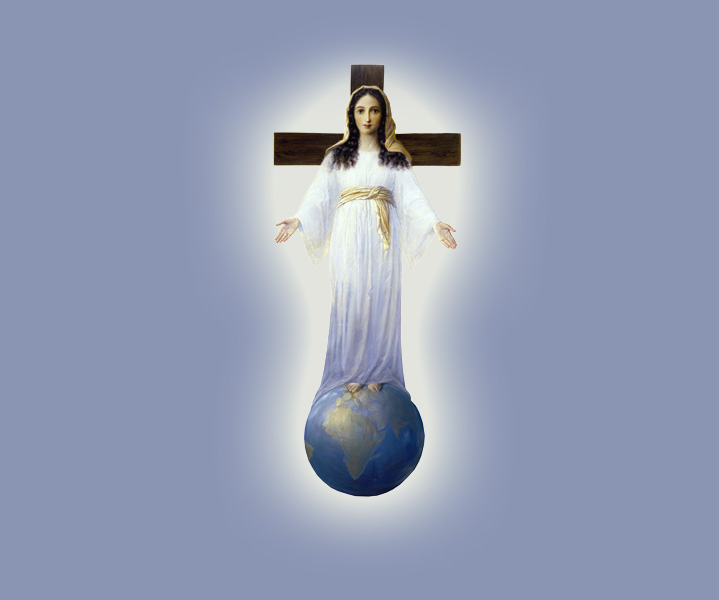
“Als u de Voorloper ziet, mag gezegd worden dat de zending van ha-Yeshua Mashiach is begonnen!”, zegt een oude Joodse wijsheid. Wie anders is die bode dan de Maagd Maria? De aanzwellende reeks eindtijdaankondigingen, denk aan Lourdes, Fatima en zovele andere, staat in de teken van “bekeert u want het rijk van God is nabij”. Die reeks aankondigingen is in 1846 begonnen met Maria’s verschijningen aan de herdertjes van La Salette. Dus de moeder Gods is de heraut ter voorbereiding van de nieuwe tijd.
Dr. Anna Terruwe’s works were based on Thomas Aquinas and “the relevance of Thomistic rational psychology to neurosis and its treatment.” Her theories are based on Aquinas’ understanding of what he calls the “nature of man.” Dr. Terruwe’s ideas about the nature of man and his emotional life are discussed in depth in the first chapter of Psychic Wholeness and Healing.. This chapter constitutes the essence of her doctoral thesis about “the psyche of man in the light of philosophical anthropology”.
It was Dr. Terruwe’s embracing of the spiritual aspect of man that gave Dr. Baars his deep desire to not only continue his vocation as a psychiatrist, but to help disseminate these important ideas with her, and then expand on them with her in their successive years of working together. Her ideas included topics about man’s emotional life, his intellect and free will, how “love is the passion of the intellect”, and how the “nature” of man’s emotional life is to “follow reason”. The discussion continues into topics of affirmation and what it means to be “authentically human”.
“When my studies of man, the rational animal, were furthered by those of man, the spiritual human being created in the image of a loving God, I at last began to comprehend the how and why of many of his afflictions.” It was the combination of philosophy and theology in the study of man and his free will that aided Dr. Baars to understand the afflictions of man in a deeper way, and to integrate this knowledge into his professional and personal life. Dr. Baars directly credited his study of Thomas Aquinas, and Aquinas’ psychology of man’s emotional life, to this understanding.
Dr. Baars understood that it is most important to heal the mind, body and spirit to bring about the healing of the whole person. He attributed his understanding of man’s free will and the conflicts between the “suffering of man and divine love” to the works of Professor W.J.A.J. Duynstee, C.SS.R., LL.D. whose works he studied along with the works of Dr. Terruwe. Dr. Baars further attributed his understanding of man and his emotional and spiritual ills to his patients themselves who he found to be an endless source for his own education in the field. He believed that he gained insight into understanding man’s desire for lasting happiness – and ultimately, of God’s profound love for man.